

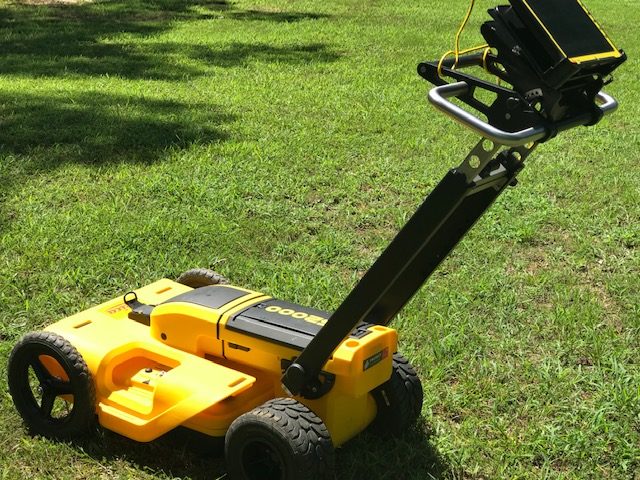
GPR, or Ground Penetrating Radar, is a cost-effective tool for scanning and imaging of sub-surface voids and defects. In the beginning, GPR was used in geophysics or geology and has been adapted in a way that can be used for many residential, commercial, and even municipal situations. Indeed, the applications are almost limitless, as GPR can detect objects using electromagnetic radar impulses.
GPR can be used to determine the strength of materials such as concrete or soil. It can also find objects such as pipes, cables, tubes, or other buried objects beneath the surface. Another way to use GPR is to find damage to objects buried beneath the ground, such as cracked or damaged pipes or other buried utilities. It can even map boundaries with multiple layers, such as roads, where you might find a layer of asphalt, concrete, and soil. It also can detect the length and thickness of what it finds below the surface. Here are some different areas of use:

The GPR machine has a transmitting antenna as well as a receiving antenna that can be either wired or wireless. It sends a signal to a processing unit.
The GPR machine emits EMPs (electromagnetic pulses) or a radar pulse to scan below the surface. It reflects waves from the layers below the surface that show objects below it.
This information is sent to the receiving antenna. The result is a scanned “picture” of what is below the surface.
If you have a civil engineering, commercial, residential, or municipal project requiring GPR, contact us for more information on the process and to get a quote.
