


Sinkholes and voids are similar in that they both form a cavity or empty space in the ground or in a building structure.
They both can cause severe damage and pose safety risks. However, there are also key differences between sinkholes and voids.
Sinkholes are caused by the collapse of underground rock and soil. This is often due to the dissolution of limestone, dolomite, or other soluble rock types.
This can happen naturally or be triggered by human activities like excessive groundwater extraction or underground mine collapses.
Sinkholes commonly form due to soil erosion, leaving voids that can fill with water, air, or other materials. This, in turn, can lead to instability and damage to structures built over these voids.
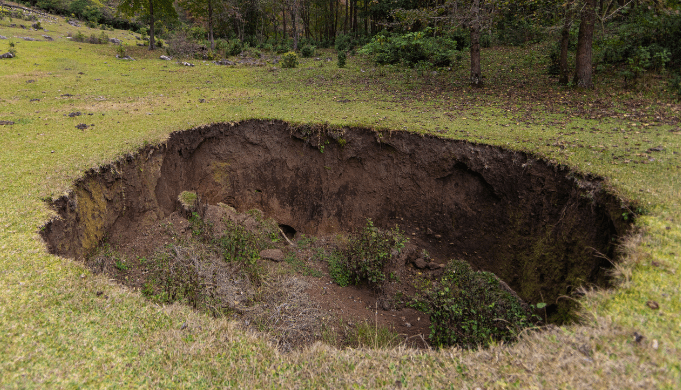
In addition, the decomposition of organic material, such as trees, can create underground sinkholes.
One of the most significant dangers sinkholes pose is the potential for collapse. A sinkhole beneath a structure can lead to settlement, cracks, and damage due to the structure’s weight.
In severe cases, the structure may collapse, posing a risk to human safety. Underground sinkholes can also cause damage to roads, bridges, and other infrastructure by causing settling, sinking, or shifting.
The Arkansas Geological Survey has identified sinkholes as a geohazard in the state.
Conversely, voids are often caused by poor construction practices or the settling of a building over time. They can also be created by missing insulation or gaps in caulking.

Unlike sinkholes, voids are typically found in the walls, roofs, or floors of a building. They can be caused by poor construction practices, settling of the building over time, or shifting of the foundation.
Voids can cause water damage by allowing water to penetrate and collect in hidden areas. Under buildings, this can result in mold and mildew, as well as structural damage caused by rotting wood or rusting metal.
Voids can also be created by missing insulation or gaps in caulking. Water can enter these voids through cracks, gaps, or other openings, and once inside, it can be challenging to detect and remove, leading to long-term damage to the building.
It is essential to detect and identify sinkholes and voids to minimize the risk of collapse and damage to structures.
Ground penetrating radar (GPR) is a powerful tool that can be used to detect and locate underground voids. GPR works by sending electromagnetic waves into the ground and measuring the returned reflections. The location and size of voids and sinkholes can be determined by analyzing these reflections.
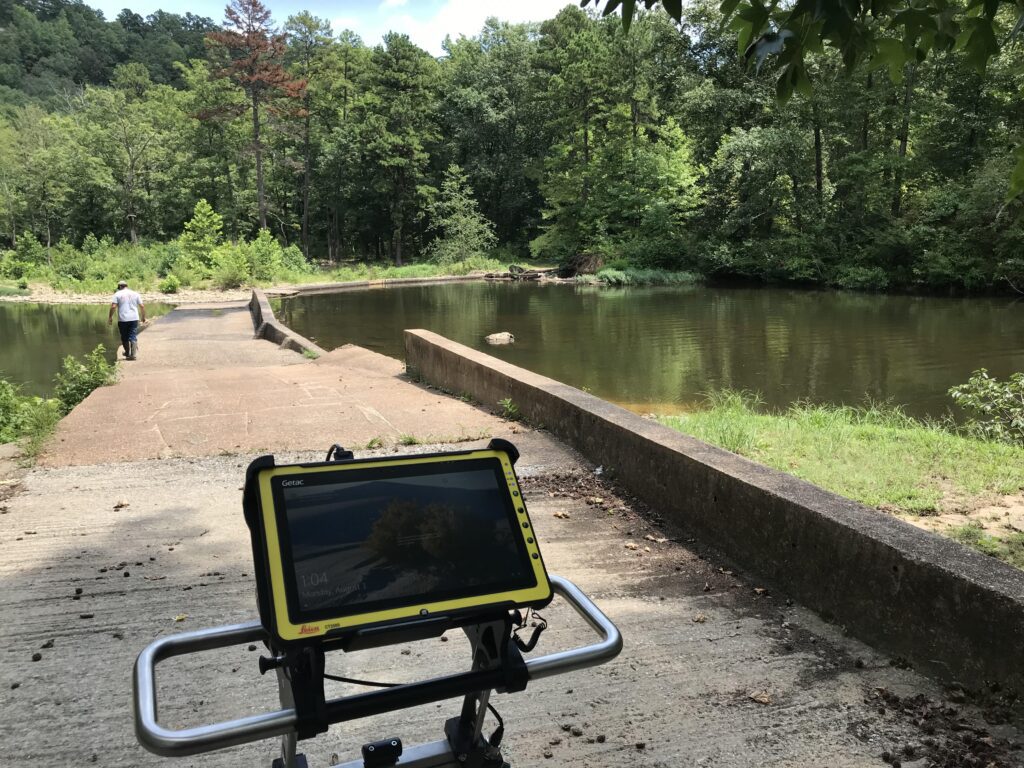
GPR is a non-invasive and safe method of detecting underground spaces. It does not require excavation or drilling, making it ideal for use in populated areas where excavation is not feasible or would cause disruption. GPR is also much faster and more efficient than traditional methods of void detection, such as digging or drilling.
GPR also has the advantage of being able to work both outdoors and on the interior of buildings and structures.
When using GPR to detect underground voids, it is important to consider the type of soil and rock on which the GPR is being used. The kind of material will affect the accuracy of the GPR readings and the depth at which voids can be detected.
Ground penetrating radar is a powerful tool that can be used to detect and locate voids and sinkholes, providing crucial information to engineers and construction professionals to help minimize the risk of collapse and damage to structures.
At GPR Arkansas, our ground-penetrating radar specialists can help you identify potential sinkholes or voids not readily apparent to the naked eye. Read about how GPR helped locate a void under a dam.
In addition to locating sinkholes or voids, GPR Arkansas works with Airlift Concrete Experts, LLC, to help stabilize and correct the problem area.
For a FREE estimate, contact GPR Arkansas today.
