

Ground-penetrating radar (GPR) technology is widely recognized for its ability to detect underground utilities, storage tanks, and other structures. However, GPR offers much more than just subsurface detection. One key advantage of GPR is its ability to assess concrete slab depth and thickness, two critical factors in construction and engineering projects.
By measuring radar waves as they reflect off different materials, GPR can provide highly accurate, non-invasive measurements of a slab’s depth and thickness. This detailed information ensures your project’s safety, cost-effectiveness, and compliance with building standards.

GPR works by emitting electromagnetic radar waves into the ground or concrete slab. These waves penetrate the material and reflect back to the surface once they encounter a change in material properties—such as the interface between concrete and the soil beneath it.
A trained technician can then analyze the data to determine the depth (the distance between the slab’s surface and the layer below) and thickness (the overall width of the slab).
This process is entirely noninvasive, meaning it doesn’t require drilling or coring, which can damage the integrity of the slab.
There are several reasons why both slab depth and thickness are critical for construction, renovation, and other projects. Here’s why it’s essential to have this information:

The structural integrity of a concrete slab is heavily dependent on its thickness. A thicker slab can bear more weight, making it suitable for heavy equipment, vehicles, or industrial machinery. On the other hand, a slab that’s too thin for its intended use can pose safety risks and lead to potential structural failures.
By knowing the thickness and depth, engineers can assess whether the slab can support its intended load, ensuring safety and compliance with building codes.
Understanding the slab’s thickness is crucial for planning the quantity of materials, like concrete, required for construction or renovation. This will impact your project’s budget, timeline, and ability to meet project specifications.
For example, when constructing an industrial warehouse, the thickness of the floor slab must be accurately measured to ensure it can support machinery or forklifts without cracking or weakening over time. Miscalculating the material requirements due to poor slab measurements can lead to delays and cost overruns.
When designing foundations for buildings, roads, or bridges, slab thickness is key in determining how loads will be distributed across the surface. If a slab is not thick enough, it may not distribute loads effectively, leading to uneven settlement or cracks.
Knowing the exact depth and thickness ensures the foundation is designed to accommodate load-bearing requirements, extending the structure’s longevity and preventing expensive repairs.
Whether it’s road construction, installing heavy machinery, or retrofitting a building, knowing the slab’s depth and thickness ensures the safety of workers, occupants, and the structure itself. Thin or deteriorating slabs can pose significant hazards if they fail under pressure.
In road construction, for instance, thin slabs may not be able to withstand heavy traffic, leading to rapid deterioration, potholes, or cracking. With GPR scans, construction teams can make informed decisions to avoid potential safety issues.
Beyond just measuring depth and thickness, GPR can reveal potential problems hidden within or beneath the slab, such as:
These hidden problems can be costly if left unchecked, but GPR offers a way to detect and resolve them before they escalate.
Knowing the depth and thickness of concrete slabs through GPR scanning is valuable in numerous fields, including:
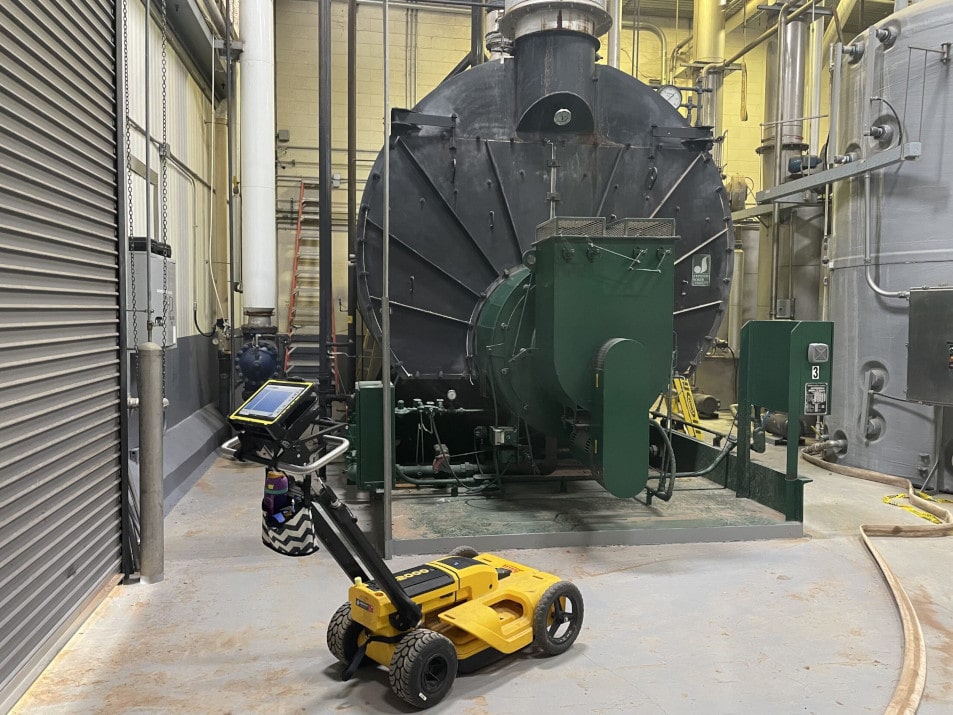
At GPR Arkansas, we use ground-penetrating radar to provide crucial data on concrete slab depth and thickness. Whether planning a new project or assessing an existing structure, our state-of-the-art technology and expert technicians ensure you have the information you need for success. Contact us today for a free estimate and learn how we can help your business.
