

When planning to dig or break ground for any reason—whether you’re a homeowner planting trees or a contractor prepping a construction site—you’ve likely heard the phrase: “Call before you dig.” In most areas, that means contacting 811 or another One Call system to locate underground utilities and avoid costly or dangerous accidents. This it when it becomes important to understand the limitations of 811.
But here’s the truth: while 811 is a crucial first step, it doesn’t catch everything
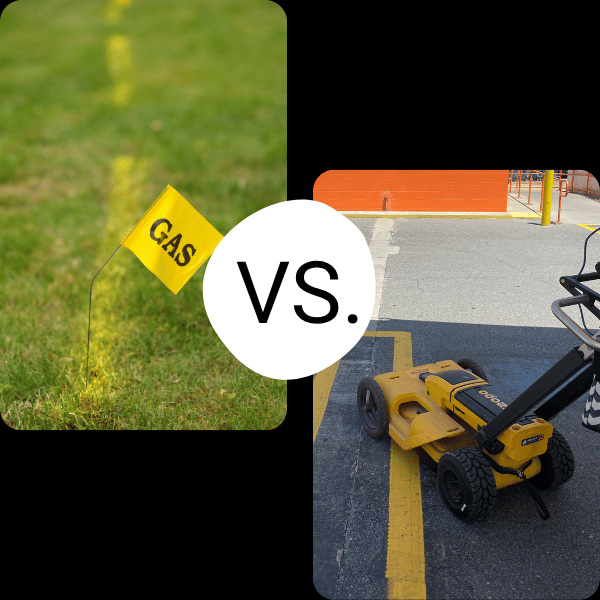
The 811 system connects you to utility companies, who then send out locators to mark publicly owned utility lines such as water, electric, gas, and telecommunications. This helps prevent unintentional strikes that can cause service outages, injuries, or worse.
These markings are typically:
While essential, One Call systems have significant blind spots that property owners, developers, and contractors need to be aware of:
811 locators are not responsible for privately-owned lines. This includes lines running from the meter to your home, outbuildings, pools, septic systems, and more. These are extremely common and often go unmarked.
Many utilities have been moved, repaired, or replaced over time—often without updated documentation. This can lead to inaccurate or missing markings.
811 doesn’t detect underground storage tanks, unknown voids, abandoned lines, or other non-utility objects that still pose serious safety risks.
Most 811 crews use electromagnetic locators that may miss non-conductive lines or misidentify materials based on depth and proximity.
This is where Ground Penetrating Radar—like the state-of-the-art system used by GPR Arkansas—comes in. GPR sends electromagnetic pulses into the ground and reads the signals that bounce back, identifying subsurface structures regardless of ownership or material.
GPR can detect:
Unlike 811 services, GPR can be used on a wide range of surfaces—soil, asphalt, concrete, and brick—and provides a much more complete picture of what lies beneath.
We recommend calling 811 and scheduling a GPR scan. 811 provides a baseline for utility location, while GPR fills in the gaps with accurate, real-time data about all potential subsurface hazards. This two-step process ensures a safer, smarter project.
If you’re preparing to dig, build, or break ground, don’t stop at 811. GPR Arkansas offers fast, accurate Ground Penetrating Radar services throughout the region. We help you prevent surprises and protect your people, property, and project timelines.
Contact us today to schedule your scan or learn more about our GPR technology.
