

Ground Penetrating Radar (GPR) is a non-destructive technology that uses high-frequency radio waves to create a visual “map” of the subsurface. This method allows professionals to identify objects, voids, utilities, and other underground features quickly, safely, and without excavation.
During a GPR scan, a technician pushes or pulls a specialized cart across the area in a systematic grid pattern. This ensures complete coverage and accurate data.
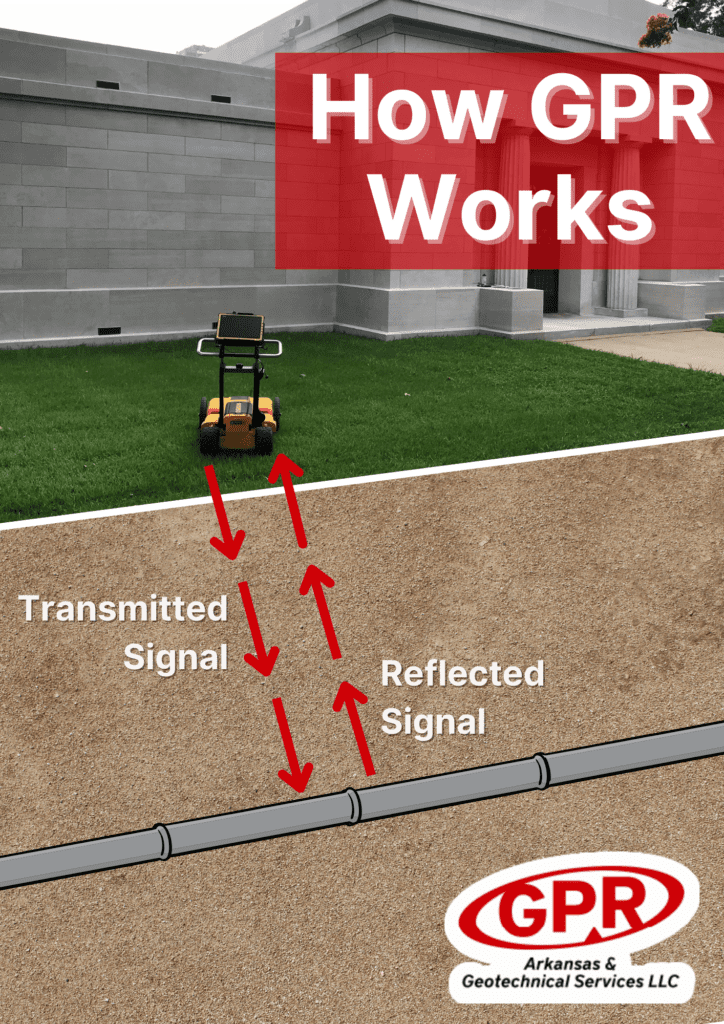
Here’s what happens during scanning:
This process gives technicians a clear view of what lies beneath without disturbing the ground.
GPR is highly versatile and effective in a variety of conditions, especially in dry or non-clayey soils. It can detect:
GPR not only locates subsurface objects but also provides accurate depth estimates, helping project managers plan safely and efficiently.
GPR is used across a wide range of industries, including:
Using GPR helps teams:
For a deeper dive into the science behind GPR, visit reputable resources such as Science Direct.
If you have a project in Arkansas or the surrounding region, GPR Arkansas & Geotechnical Services LLC is ready to help. Our team provides precise, professional subsurface scanning to keep your project safe, efficient, and compliant.
Have questions or need a quote? Contact GPR Arkansas today.
GPR depth depends on several factors, including soil composition and moisture levels. In ideal conditions—dry, sandy, or low-clay soils—GPR can detect objects several feet underground. In clay-heavy or saturated soils, signal depth is reduced. A skilled operator can help assess what depth range is realistic for your specific site conditions.
The biggest factors are soil type and moisture content. Dry, non-conductive soils produce the clearest results, while wet or clay-heavy soils absorb radar signals and can limit both depth and accuracy. The skill and experience of the operator also plays a significant role in how accurately results are interpreted.
Yes. GPR is a non-destructive, non-invasive technology. It emits low-power electromagnetic signals that pose no risk to people, structures, or underground utilities. No excavation is required, making it a safe option for both crews and the surrounding environment.
Yes. GPR is widely used for concrete scanning and can detect rebar, post-tension cables, conduits, and voids within concrete slabs, walls, and foundations. This makes it valuable for any project that involves cutting, coring, or drilling into concrete.
