

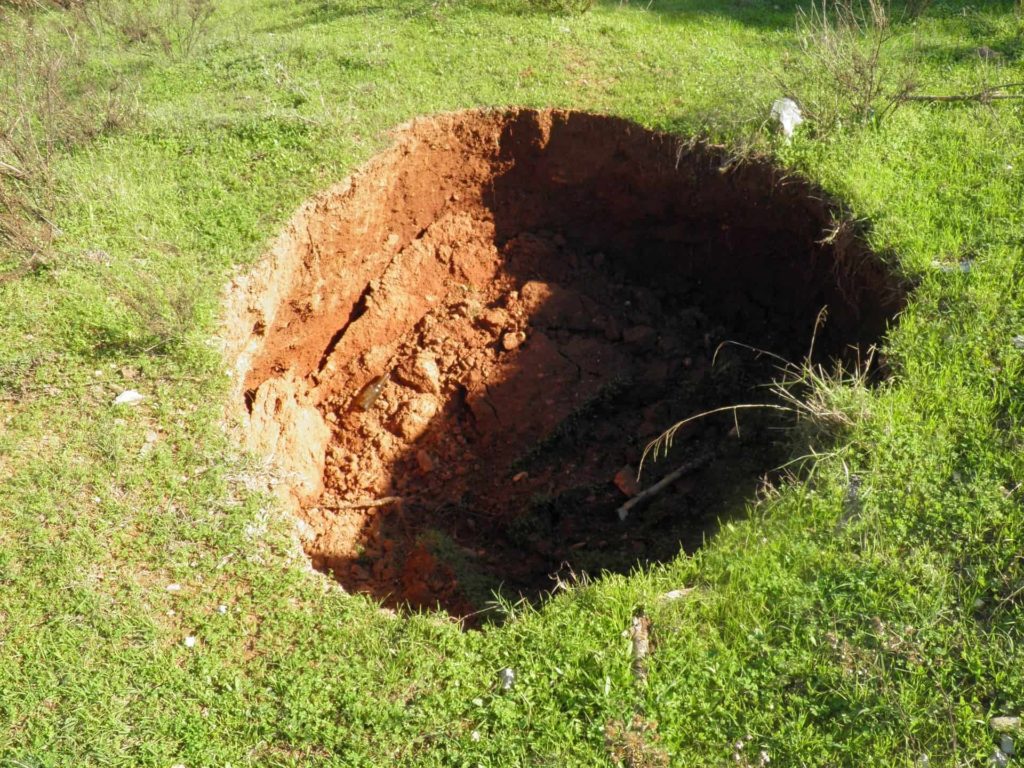
Sinkholes can pose a serious risk to properties, roads, and structures, but the conditions that contribute to them aren’t always visible from the surface. Ground penetrating radar (GPR) can help identify subsurface anomalies and underground voids that may indicate potential sinkhole activity.
By providing information about conditions beneath the surface without excavation, GPR can be a valuable tool when investigating areas where sinkholes or underground voids are a concern.
A sinkhole is a depression or hole in the ground that forms when the surface layer collapses into an underground void or cavity. Sinkholes can vary greatly in size and may develop gradually over time or appear suddenly.
Natural sinkholes can develop when groundwater dissolves certain types of rock beneath the surface, creating underground cavities. If a cavity becomes too large to support the ground above it, the surface may eventually collapse.
According to the United States Geological Survey, about 20 percent of the U.S. land is susceptible to sinkholes.

In the Northern Arkansas Ozark area, properties are at risk of sinkholes forming due to karst from carbonate rock. In the southern portion of the state, evaporated rocks, such as salt and gypsum, are the more likely cause of this phenomenon.
Sinkholes don’t always appear without warning. Certain changes around a property may indicate subsurface movement or another problem that should be investigated. Possible warning signs can include:
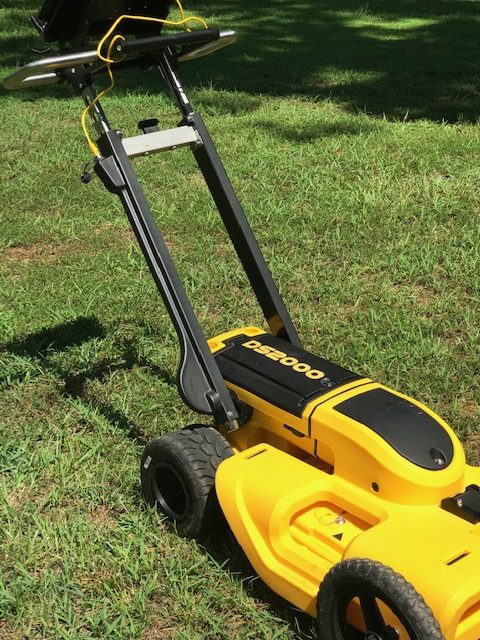
Ground-penetrating radar is designed to detect subsoil objects, including sinkhole voids.
A GPR transmitter uses high-frequency, polarized radio waves. The radio waves are transmitted into the ground.
Radio waves may reflect, refract, or scatter back to the surface when encountering an object or a boundary between materials.
Variations can be recorded using a receiving antenna. The result is a map of what’s beneath the surface.
Ground-penetrating radar is ideal for detecting anomalies in the subsurface, such as voids that could cause sinkholes.
If you suspect underground voids or unusual subsurface conditions, GPR Arkansas can help investigate what’s beneath the surface using non-destructive ground penetrating radar.
Contact GPR Arkansas today for a FREE estimate and learn whether GPR scanning is right for your property or project.
