

Are you planning to excavate around your business but feeling worried about hitting something important like a sewer line or similar structure? You need a way to “see” underground. The problem is deciding what method to choose. Two main options are ground penetrating radar (GPR) and X-rays. But how do the two compare, and which is right for you?

X-ray scanning, also called industrial radiography, has long been used to image the interior of concrete structures. It works similarly to medical X-rays — radiation is passed through the concrete and captured on a film or digital detector on the opposite side, producing a detailed image of what’s inside.
X-ray scanning can be quite accurate, which is why it was the go-to method for concrete scanning for many years. It can reveal rebar, post-tension cables, conduits, and voids within a concrete slab or wall with a high level of detail.
However, X-ray scanning comes with some significant drawbacks that limit its practicality for many commercial projects:
For these reasons, X-ray scanning has largely been replaced by ground penetrating radar for most concrete scanning applications.
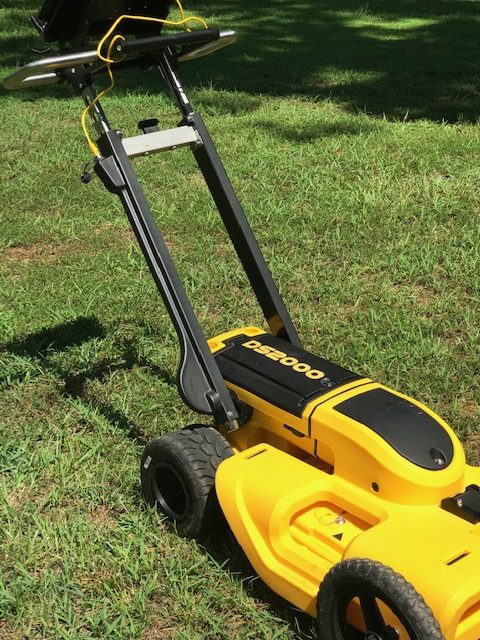
Ground-penetrating radar (GPR) is a geophysical method that sends radar pulses into the ground or through a structure to produce an image of what’s beneath the surface — no digging or radiation required.
In most commercial applications, GPR has significant advantages over X-ray scanning. It’s faster, more cost-effective, and far easier to deploy on an active job site. Because GPR emits next to no radiation, there’s no need to clear the area during a scan, which means less disruption and downtime for your project.
GPR also addresses the access problem that limits X-ray scanning. Rather than requiring access to both sides of a structure, a GPR unit can scan from a single surface — making it practical for concrete slabs on grade, floors, walls, and a wide range of other applications. It can also scan in three dimensions, giving operators a more complete picture of what’s inside a structure than a traditional X-ray image provides.
Another key advantage is speed. GPR results are available in real time as the scan is being performed, allowing operators and project managers to make decisions on the spot rather than waiting for film to be processed. GPR is also capable of scanning deeper beneath the surface than X-ray methods, making it versatile across a wider range of project types and conditions.
| Feature | Ground Penetrating Radar (GPR) | X-Ray Scanning |
| Radiation Safety | Emits next to no radiation. Safe to use around people. | Emits ionizing radiation. Area must be cleared of personnel. |
| Access Requirements | Scans from one surface. Only requires access to one side. | Requires access to both sides of the structure for source and detector. |
| Speed & Results | Results available in real time. | Results require time to process. |
| Detail & Depth | Provides 3D images. Can scan deeper. | Provides 2D images. Limited scanning depth. |
| Cost | More cost effective due to fewer setup and safety requirements. | More expensive due to safety protocols, equipment, and logistics. |
For most commercial uses, GPR is the better choice. It is safer and faster than X-ray scanning which makes it more cost effective as well. It can give a more detailed, 3D image of what is being scanned, and it only requires access to one surface rather than two. In rare cases where extremely precise imaging is needed and GPR results are inconclusive, X-ray may still be considered — but for the vast majority of commercial concrete scanning projects, GPR is the faster, safer, and more practical solution.
Ready to make the smart choice and get started scanning with GPR? Call GPR Arkansas today for more information, or contact us for a free estimate.
X-ray scanning (also called radiography) has historically been used to image the interior of concrete structures, revealing rebar, conduits, and voids. It works by passing radiation through the concrete and capturing an image on the other side. While accurate, it requires access to both sides of the structure and involves radiation safety protocols that can slow down the process significantly.
Yes. GPR emits extremely low levels of electromagnetic energy and poses no radiation risk to operators or bystanders. X-ray scanning requires the surrounding area to be cleared during the scan due to radiation exposure concerns. For most commercial applications, GPR’s safety profile makes it the preferred option.
For most applications, yes. GPR provides real-time results, can scan in three dimensions, and doesn’t require access to the opposite side of a structure. X-ray imaging can be highly accurate but is slower, more expensive, and more logistically complex. GPR has become the industry standard for concrete scanning for these reasons.
X-ray scanning may be considered in situations where extremely precise imaging is required and GPR results are inconclusive, or in highly controlled environments where the logistics of radiation safety can be managed. However, for the vast majority of commercial concrete scanning projects, GPR is the faster, safer, and more cost-effective choice.
